
Strategy, Policies and Procedures in VET Quality Assurance Workshop
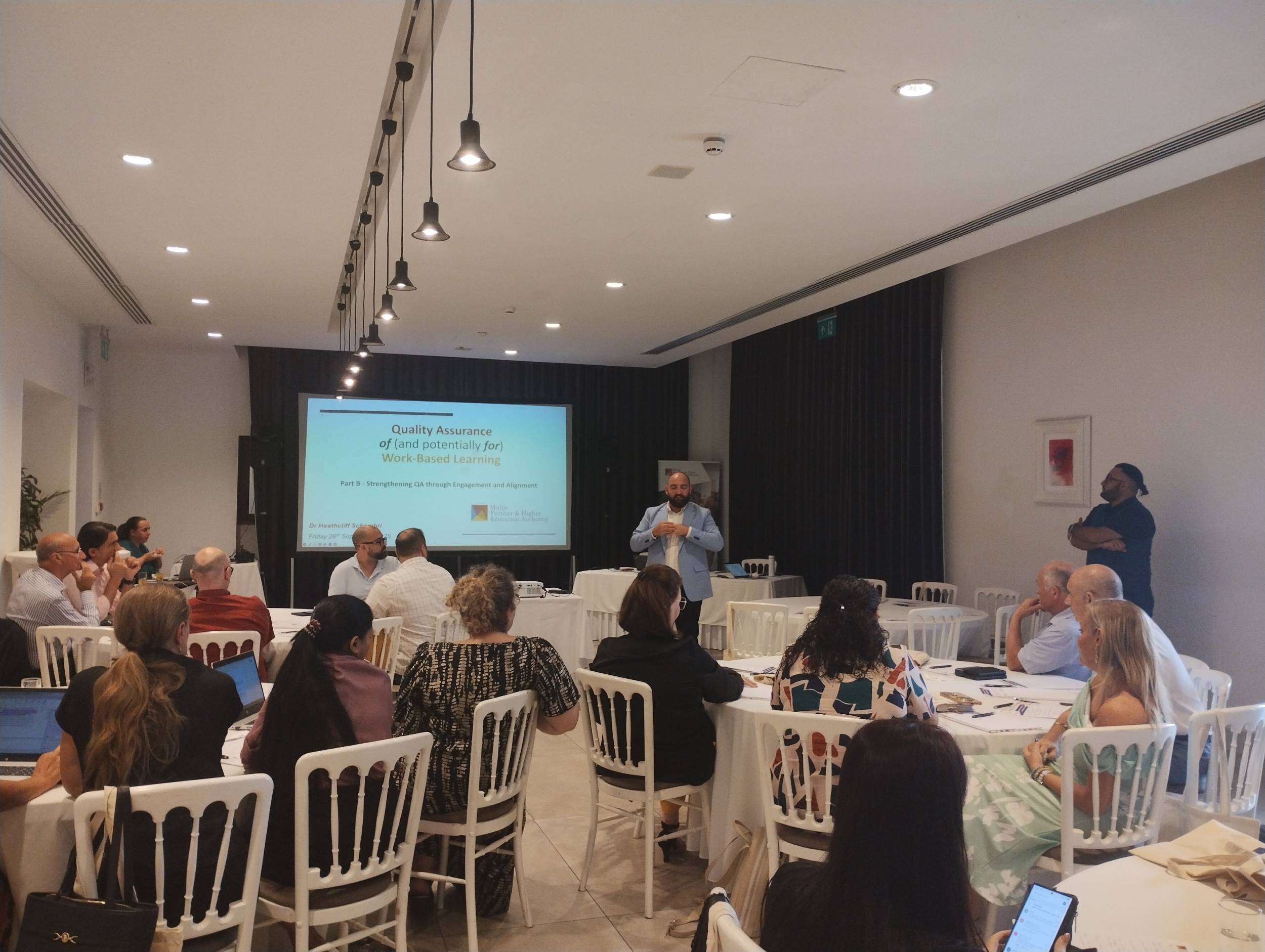
As part of the EQAVET 2023 Project, the Malta Further and Higher Education Authority (MFHEA) organised an interactive online workshop titled
Project Overview
- Project Name : CPD in VET QA
- Porject Date : Thursday, 16th October 2025
- Venue: Online Webinar
- Speakers: Dr Carlos Grima and Prof. Mine Karatas-Ozkan
As part of the EQAVET 2023 Project, the Malta Further and Higher Education Authority (MFHEA) organised an interactive online workshop titled “Strategy, Policies and Procedures in VET Quality Assurance”.
The event aimed to strengthen institutional quality assurance (QA) mechanisms across Malta’s vocational education and training (VET) sector by fostering understanding of how strategic planning, policy development, and procedural design can support a culture of quality.
The workshop explored the interconnections between QA structures and everyday institutional practice through three key areas:
- Part A: Strategy, Policies and Procedures related to Student-Centred Learning, Teaching and Assessment
- Part B: Strategy, Policies and Procedures related to Teaching Staff
- Part C: Policies and Procedures related to Learning Resources and Student Support
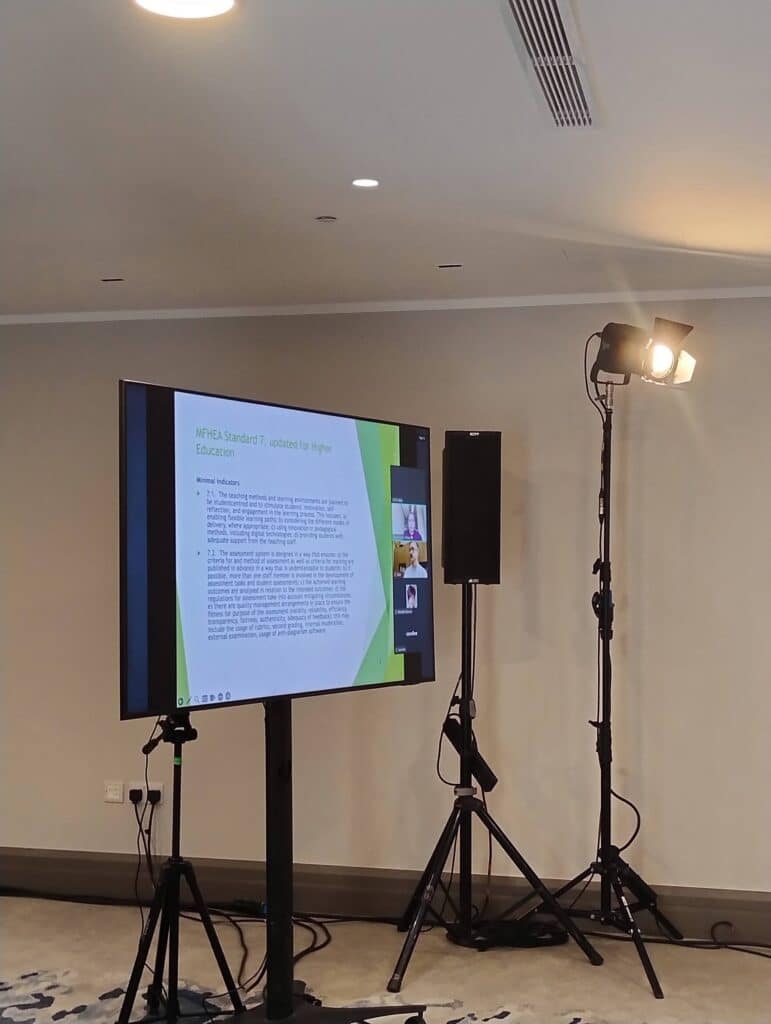
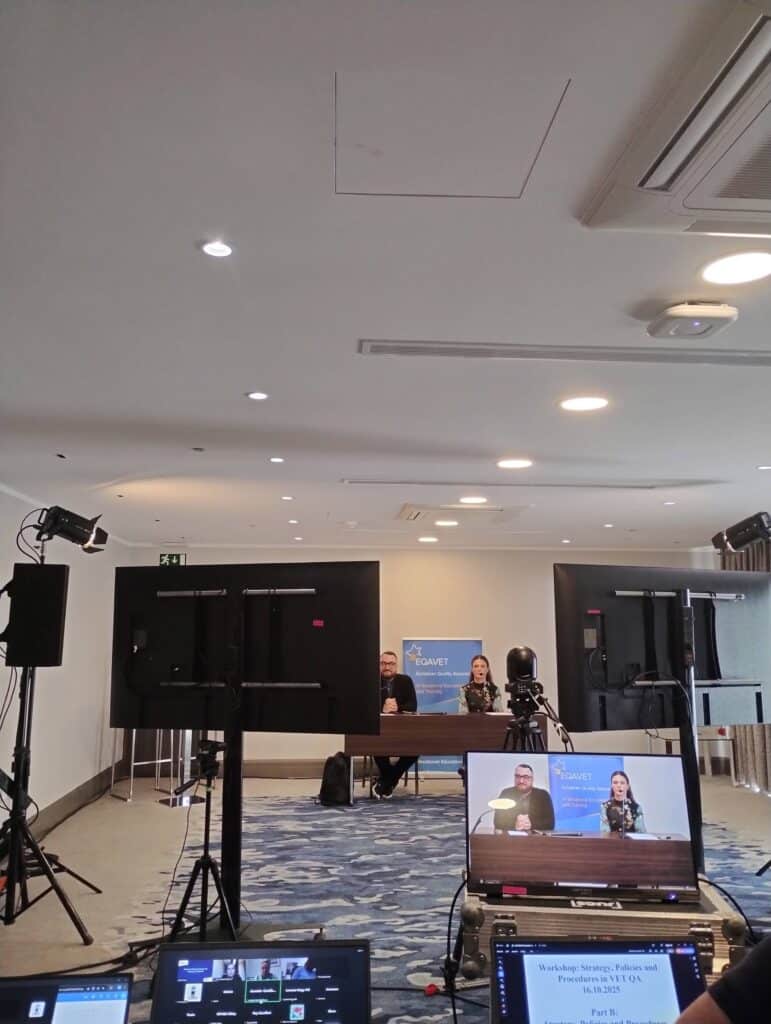
Delivered as an online webinar, the session combined formal presentations with interactive discussions and was recorded for future dissemination via the MFHEA website.
Objectives of Participation
The workshop sought to:
- Promote a deeper understanding of the relationship between institutional strategy and effective quality assurance practices.
- Support VET institutions in designing coherent QA frameworks that align with EQAVET principles.
- Encourage the integration of student-centred learning approaches and staff development within institutional QA systems.
- Strengthen awareness of the role of learning resources and student support services in maintaining educational quality.
- Reinforce MFHEA’s mission to promote transparency, accountability, and continuous improvement within the Maltese education and training landscape
Structure and Engagement
The three-hour webinar followed a clear structure designed to balance theoretical exploration with practical reflection.
The opening segment (14:00 – 14:20) included a welcome address and an overview of the session’s objectives, followed by a brief outline of the online house rules to ensure smooth virtual participation.
Part A – Student-Centred Learning, Teaching, and Assessment
This first session examined institutional strategies and procedures that foster student-centred approaches. Discussions focused on active learning, fair and transparent assessment processes, and mechanisms for incorporating learner feedback into institutional improvement.
Part B – Teaching Staff
The second session addressed policies related to staff recruitment, professional development, performance evaluation, and engagement in QA activities. Facilitators highlighted how teaching staff play a central role in embedding quality culture at both programme and institutional levels.
Part C – Learning Resources and Student Support
The final session explored how institutions can strengthen policies around infrastructure, learning materials, and support services to enhance the learner experience and ensure equitable access to resources. Each part was followed by interactive Q&A sessions, encouraging participants to share examples of good practice and discuss challenges specific to their institutional contexts.
Participation and Interaction
The webinar brought together a wide range of stakeholders, including representatives from VET institutions, educators, administrators, and QA professionals. The online setting allowed for broad participation and dynamic exchange of ideas through moderated discussions and chat-based interaction.
Participants actively contributed throughout, reflecting on how the themes discussed could be translated into actionable institutional strategies. The facilitators observed a strong commitment among attendees to advancing the principles of quality assurance, with several participants highlighting the importance of student involvement and staff empowerment in driving institutional quality.
Feedback and Observations
Feedback from participants was positive, emphasising the relevance of the topics covered and the clarity of the session’s structure. Many attendees valued the balance between theoretical insights and practical applications, noting that the workshop provided useful examples of how QA policies can be operationalised within institutional settings.

MFHEA
View Profile